Why Your Curtains Make Your Room Look Cheap (And How to Fix It)
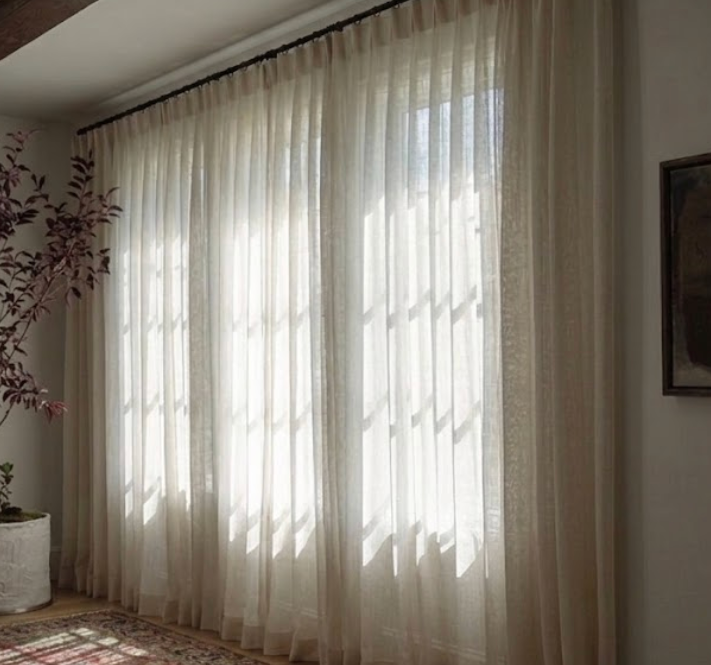
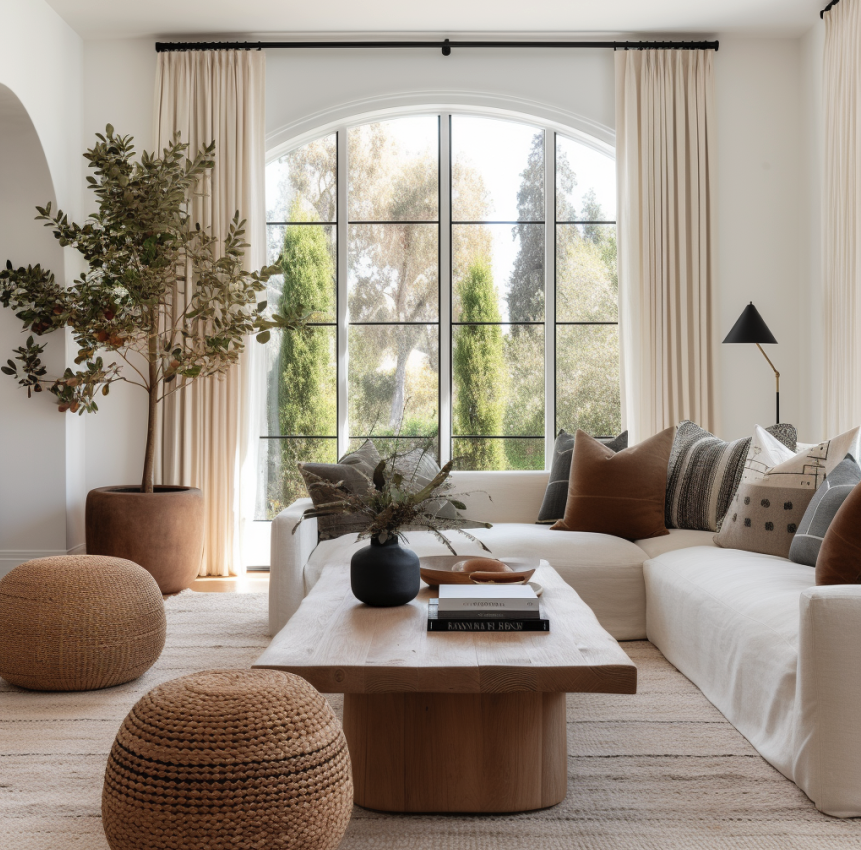
Curtains are one of the highest-leverage moves in a room. Done right, they add warmth, height, and that finished quality that makes a space feel intentional. Done wrong, they make an otherwise decent room look cheap, cold, and unfinished.
The frustrating part: the mistakes are completely avoidable. None of this is complicated. It just requires knowing the rules before you hang anything.
If You're Renting
This is especially worth your attention. If you can't paint, curtains are your best tool for adding warmth and color to a space. A bold or textured curtain does what paint would do — changes the entire feeling of a room — without touching a wall. Don't treat them as an afterthought.
The 5 Things That Separate Good Curtains From Bad Ones
1. The rod ends should never be empty.
This is the detail most people miss. When curtains are closed, they should extend all the way to the end of the rod — no exposed hardware visible beyond the fabric. Use a ring or loop to secure the curtain to the very end before the bracket. It's a small thing that reads as intentional versus unfinished.
Example image below:
2. Length is everything.
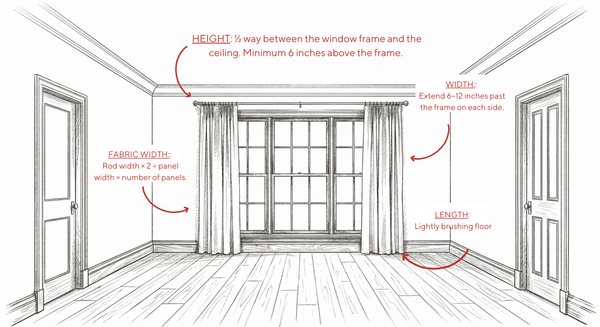
Curtains that float above the floor look like a mistake. Curtains that puddle dramatically on the ground look like you couldn't be bothered to measure. The goal is for the fabric to just kiss or brush the floor — enough to look intentional, not enough to collect dust.
If your windows are an irregular height, use rod placement to solve it. Hang the rod higher or lower to get the length right, rather than hunting for custom sizing. This gives you flexibility to use standard curtain lengths without the custom price tag.
3. Hang high and wide.
The standard rule: hang the rod 4 to 6 inches above the window frame. This makes the window feel larger and the ceiling feel higher. It's one of the simplest ways to make a room feel more expensive without spending anything.
Wide matters too. The rod should extend far enough on each side that when the curtains are open, they frame the window rather than covering part of it. You want to see glass, not fabric, when they're pulled back.
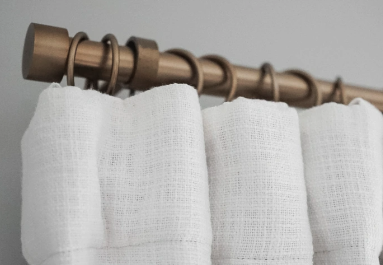
Here is a curtain rod that I have in 2 rooms of my home:
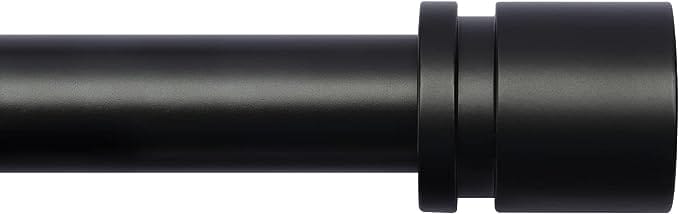
- The above curtain rod is wonderful for the price but if you want to make it more high end (like I did) I recommend swapping out the bracket for the below:
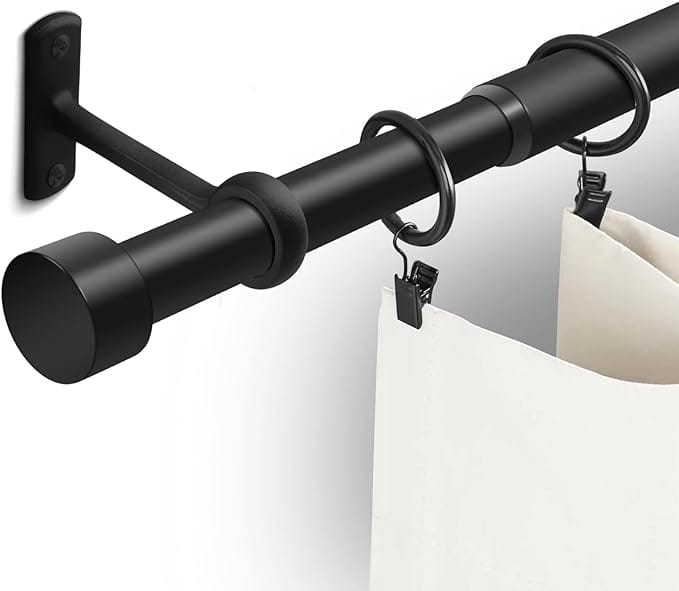
4. Make them functional.
Curtains that can't actually close are a design problem waiting to happen. For curtains to close without pulling or bunching, the total fabric width should be roughly double the window width. Even if you never plan to close them, this fullness is what makes curtains look substantial rather than sparse.
Lastly, don't forget that curtains need to be both beautiful and practical. Ensure they can close smoothly without stretching or bunching up, and strike the right balance between light control and privacy for your space.
5. Skip grommets.
Grommet curtains read casual. They're fine in the right context but if you're aiming for a pulled-together, elevated look they're usually working against you. Curtain rings give you a cleaner hang and more flexibility with fabric weight. Tab tops work well for stationary panels where you want a contemporary, tailored look.
The Honest Summary
Most bad curtains aren't a fabric problem or a budget problem. They're a hanging problem. The right curtain hung wrong looks cheap. The wrong curtain hung right looks intentional.
Get the length, the height, the width, and the rod ends right — and almost any curtain will look like you knew what you were doing.
Curtains are also one of the easiest upgrades in an Airbnb or rental — high visual impact, no permanent changes required.
 Parker Ellis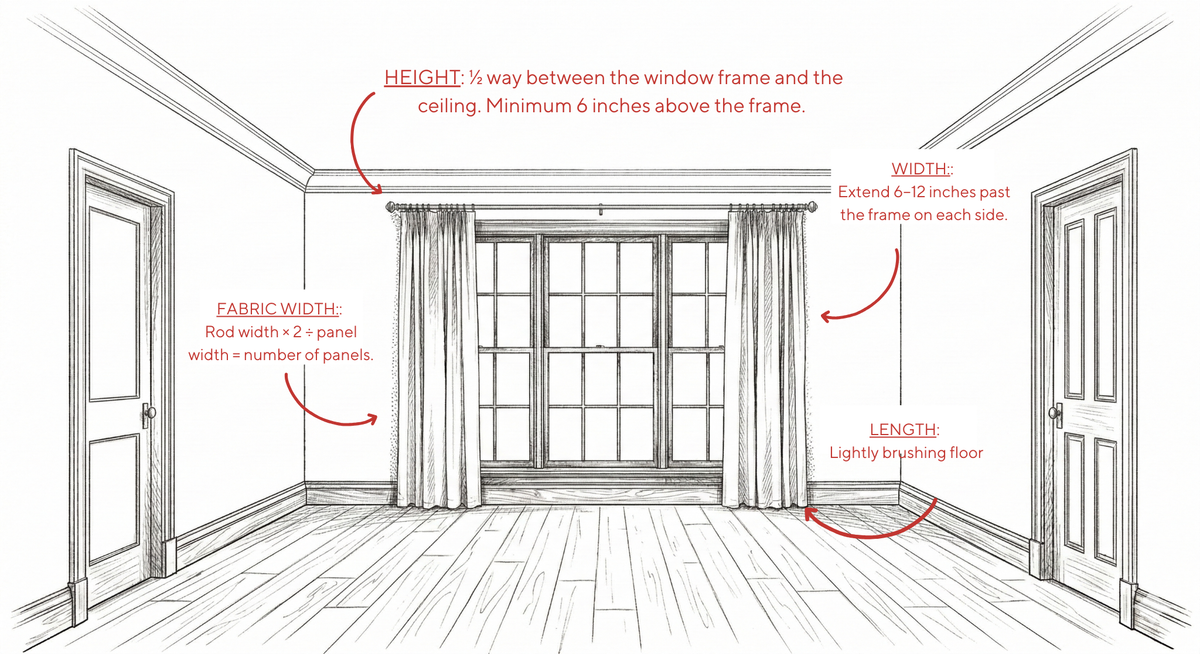
 Parker Ellis