Window Treatments 101: What Actually Matters
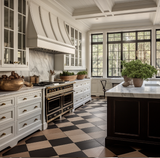
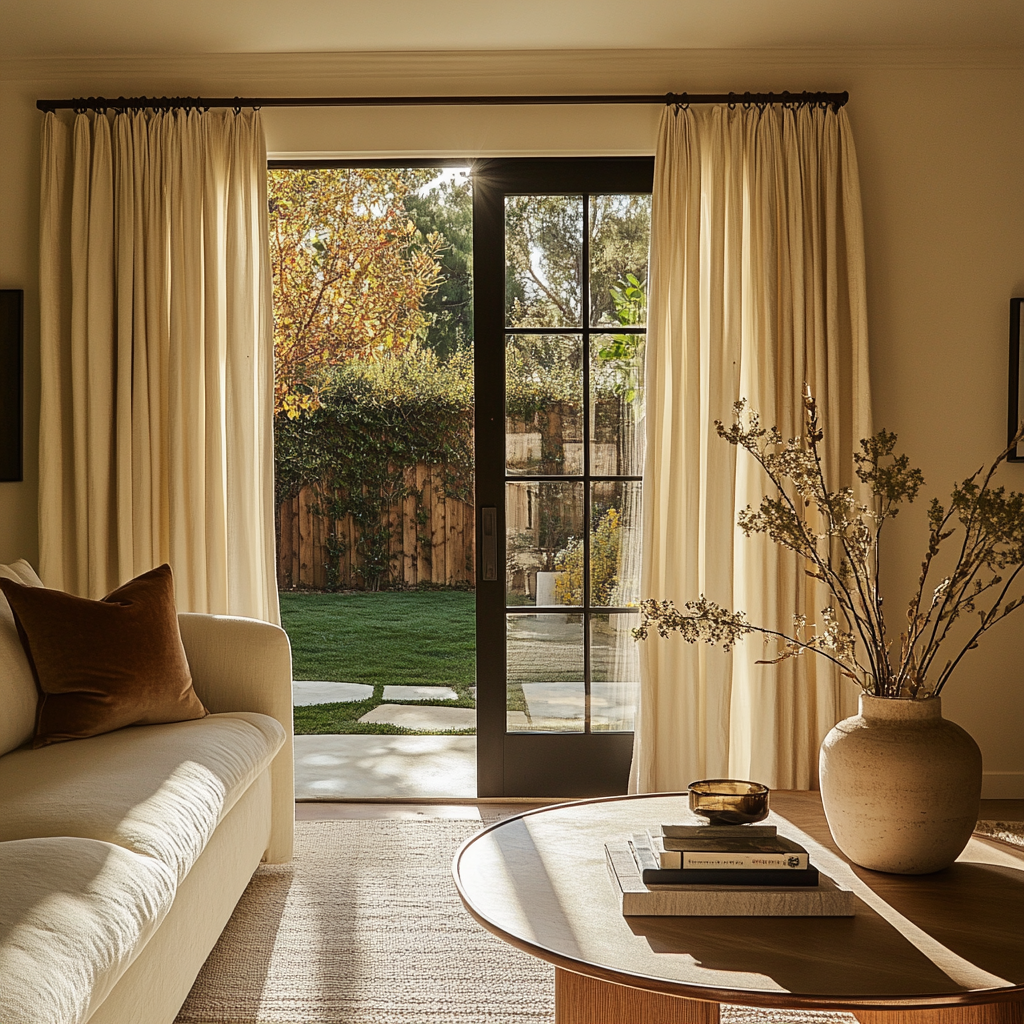
Most people ignore window treatments until a room feels weirdly unfinished and they can't figure out why. Then they buy something cheap, hang it wrong, and wonder why it still looks off.
Here's the thing: curtains and shades are one of the highest-leverage moves in a room. They add softness, scale, and warmth — three things that hard surfaces (floors, walls, furniture) can't give you. Get them right and a room suddenly looks intentional. Get them wrong, or skip them entirely, and you've left a lot on the table.
This is how to think about them without going down a rabbit hole.
Start with the job, not the style
Before you pick a fabric or color, decide what the window treatment actually needs to do. Everything else follows from that.
- Block light completely → Blackout shades or lined blackout curtains. Outside-mount them — meaning the hardware extends past the window frame — so light doesn't leak around the edges. Non-negotiable for bedrooms and media rooms.
- Privacy without losing daylight → Sheer or semi-sheer panels. You can see light, not people.
- Purely decorative → Light-filtering panels in a fabric you like. They add texture and color without doing much else. That's fine. Not every window needs to be a utility decision.
If you try to solve multiple problems with one treatment, you usually end up with layered panels — a sheer underneath, a blackout or heavier panel on top. It's a classic combo and it works. It's also more hardware and more cost, so only do it where it genuinely matters (bedrooms, yes; powder room, probably not).
The room-by-room short version
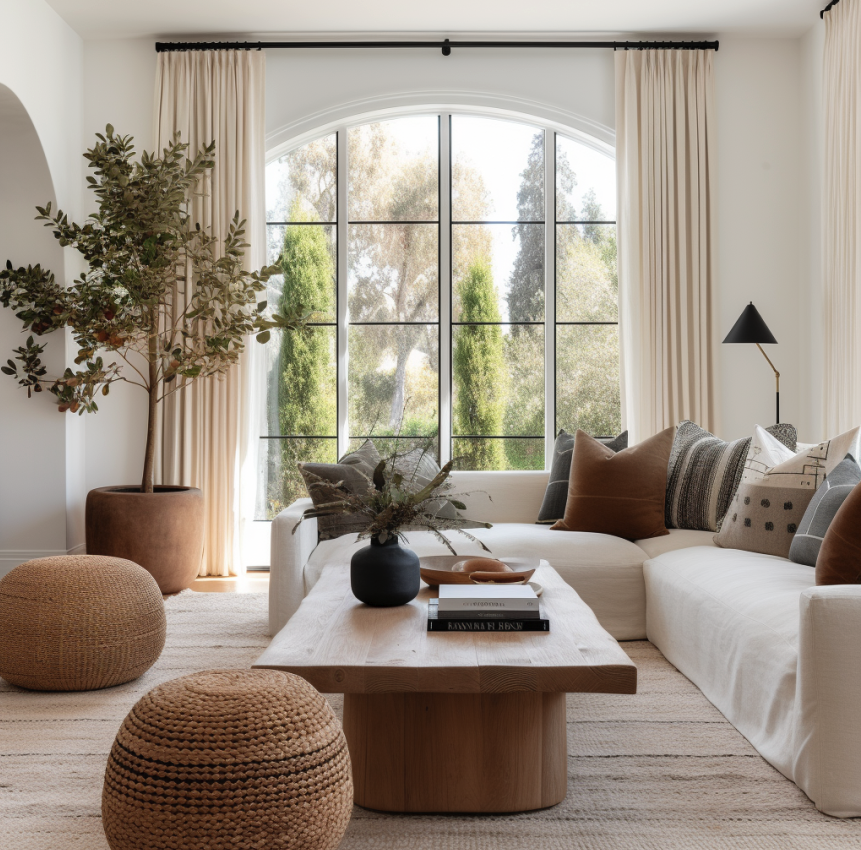
Living room: Go light and flowy. Linen or cotton. The goal is softness and warmth, not darkness. You want them to move slightly and look relaxed, not stiff.
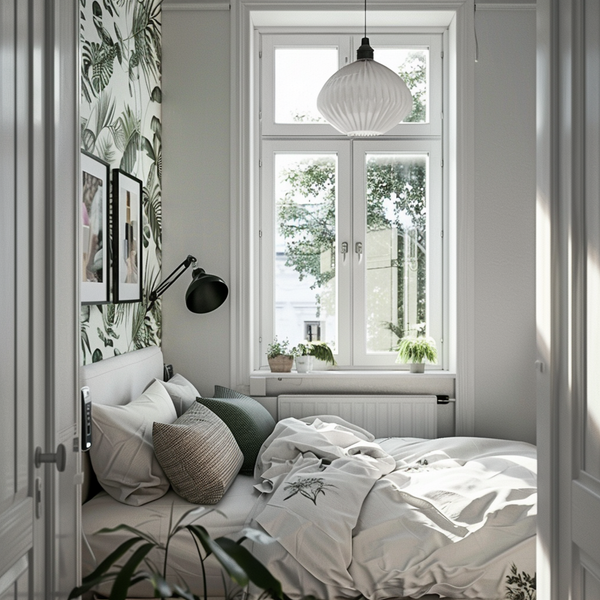
Bedroom: Blackout, full stop. Layer them under a sheer if you want the room to feel finished during the day. But the blackout is the priority.
Kitchen: Cafe curtains (bottom-half coverage) or a simple valance. You want natural light; you don't need floor-length panels over a sink. Keep it simple.
Home office: Depends on screen glare. If your monitor faces a window, light-filtering shades are more useful than you'd think.
Fabric: the three that actually matter
You could read twelve fabric guides. Or you could just know these:
- Linen — Casual, airy, works in almost any room. Wrinkles, which either bothers you or it doesn't. If it doesn't, linen is your default.
- Cotton — Crisper than linen. Cleaner look. Washes easily. Good for kitchens and casual spaces.
- Velvet — Heavy and dramatic. Use it intentionally: a bedroom you want to feel cocooning, a living room with a moody vibe. Not subtle, but it earns its keep.
Everything else — polyester blends, sheer voile, faux silk — either fills a specific need or tries to approximate the above at a lower cost. Buy the real thing when you can afford it. The difference is visible.
Color and pattern: one rule
Solid furniture → you can try a pattern. Patterned furniture → stick to solids.
If you go neutral (white, cream, warm off-white, greige), you'll never regret it. Neutrals disappear in a good way — they add texture without demanding attention. If you want personality, get it from a pattern, but keep scale in mind: large prints in large rooms, smaller prints in tighter spaces. Oversized pattern in a small room looks like a mistake.
Sizing: the three numbers that matter most
Most people hang curtains wrong. Here's the correction:
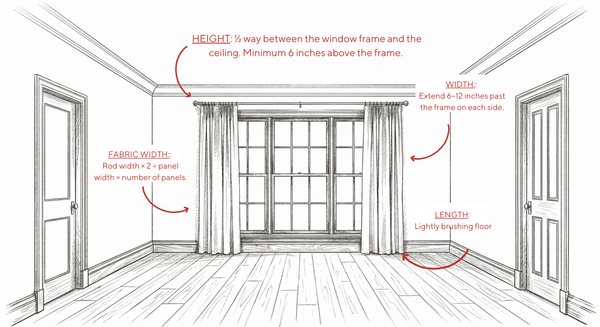
Width: Panels should be 2× the width of the window total. If your window is 40 inches wide, you want 80 inches of fabric. This gives you a full, gathered look. Skimping makes curtains look like they're gasping.
Length: Pick one of three looks:
- Floating an inch above the floor → clean and modern
- Just grazing the floor → tailored, classic
- Pooling on the floor → dramatic, intentional
Anything that stops at the windowsill or mid-wall looks like an accident.
Height: Hang the rod high — close to the ceiling, not just above the window frame. This makes the ceiling feel taller and the window feel bigger. The gap between the top of the window and your rod should be at least 6–12 inches. More is usually better.
Hardware: match it to the room, then forget about it
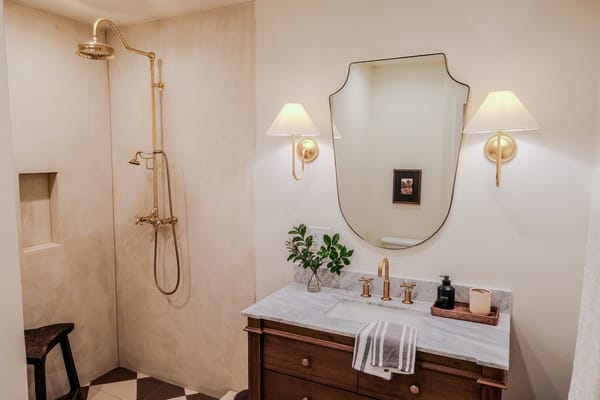
You don't need to overthink rods. Just match the finish to other metals in the room — light fixtures, cabinet pulls, faucets. If those are matte black, get a matte black rod. If they're brass, get brass. Consistency here is what makes a room look considered rather than assembled at random.
One thing worth spending on: sturdy brackets. Flimsy hardware lets curtains sag and stick. It's a small cost difference that you'll notice every time you open them.
Where to buy
Custom (when you have odd windows, specific needs, or want a premium finish): The Shade Store, Calico, Smith & Noble. These are worth it when you have windows that don't fit standard sizes, want specific linings, or are doing a full room.
Semi-custom (most people, most of the time): Pottery Barn and West Elm have solid options with multiple size choices. Etsy (search Loom Decor or Pepper Home) is good for made-to-order panels at reasonable prices. Amazon has a wider range than you'd expect if you're willing to sort through it.
The summary
- Decide what the treatment needs to do — light control, privacy, or just aesthetics
- Match to the room's function
- Choose linen, cotton, or velvet based on feel and formality
- Neutrals work everywhere; patterns work when your furniture is solid
- Hang high, extend wide, go to the floor
- Match hardware to your existing metals
That's it. You don't need to become a window treatment person. You just need to not leave the room unfinished.
 Parker Ellis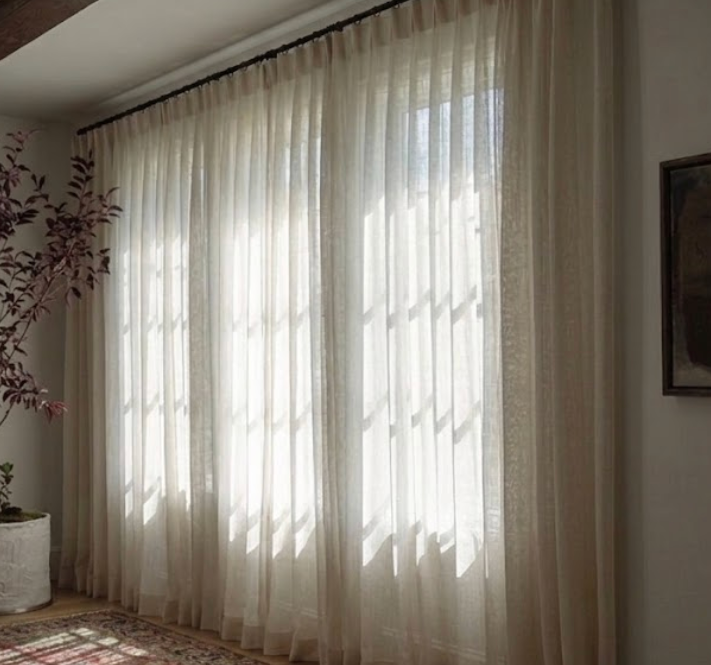
 Parker Ellis